

 中文
中文Maintaining Critical Integrity: Vertical Transportation for Controlled Environments
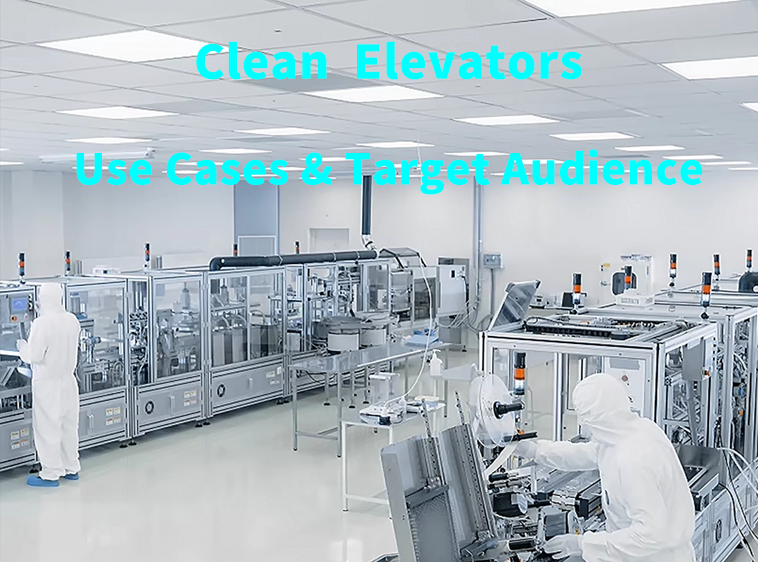
1. Primary Use Cases & Application Scenarios
Clean elevators are precision-engineered to prevent contamination and are an integral component in the infrastructure of highly sensitive manufacturing and research facilities. Their primary applications include:
Contamination-Control Logistics: Facilitating the safe and seamless vertical transport of sensitive materials, components, and products between different cleanliness classification zones (e.g., from ISO Class 8 to ISO Class 5) within a single facility, while minimizing particulate and aerodynamic contamination.
Process Integration in Microelectronics & Semiconductor Fabs: Serving as a critical link in the manufacturing flow of silicon wafers, microchips, and displays. They are designed to mitigate the risks posed by airborne molecular contamination (AMC), static discharge, and vibration, which can devastate production yields.
Biopharmaceutical & Medical Device Manufacturing: Ensuring the integrity of sterile processes by transporting APIs (Active Pharmaceutical Ingredients), vaccines, medical devices, and packaging through Grade A, B, C, or D environments without compromising strict Good Manufacturing Practice (GMP) standards.
Life Sciences & Research Laboratory Support: Enabling the secure movement of sensitive samples, cell cultures, and other critical research materials between laboratory floors in facilities such as genomics centers, pharmaceutical R&D labs, and bio-containment areas.
Aerospace & Optical Precision Manufacturing: Protecting large, delicate, and high-value components like satellite modules, laser optics, and advanced sensors from particulate contamination and physical damage during vertical movement within production cleanrooms.
2. Target User Demographics & Decision-Makers
Clean elevator solutions are specified for industries where even micron-sized particles can result in catastrophic product failure or astronomical financial loss. The key stakeholders include:
Facility Managers & Operations Directors: Professionals in semiconductor foundries, pharmaceutical plants, and medical device manufacturers responsible for ensuring uninterrupted, contaminant-free production and strict adherence to ISO and GMP classifications.
Process Engineers & Plant Designers: Engineering specialists who design and integrate mission-critical infrastructure. They specify elevators that meet exacting requirements for materials of construction (e.g., 304/316 stainless steel, anti-static coatings), sealing, and airflow management.
Executive Leadership in Technology & Life Sciences: C-suite executives (CTOs, VPs of Operations) at leading tech and biotech firms for whom manufacturing integrity is a core competitive advantage. They invest in this specialized infrastructure to protect billion-dollar production lines and ensure product reliability.
Architectural & Engineering (A&E) Firms: Consultants specializing in the design of advanced industrial facilities, cleanrooms, and high-tech parks. They specify these systems as a fundamental component of the building's contamination control strategy.
Government & Defense Contractors: Entities managing sensitive production and research for national defense, aerospace, and other government projects that require the highest levels of environmental control and security.
In essence, a clean elevator is not merely a conveyance but a critical controlled environment in motion. It is a strategic investment in quality assurance, production yield, and the safeguarding of intellectual property within the world's most technologically advanced industries.
 Service Hotline