

 中文
中文Engineered for Extreme Environments: Safe Vertical Transportation in Hazardous Locations
1. Primary Use Cases & Application Scenarios
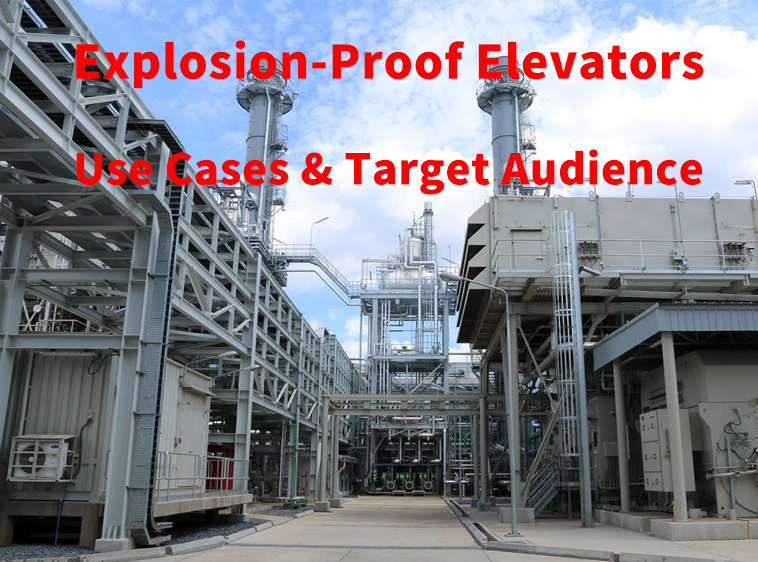
Explosion-proof elevators are purpose-built to operate safely in atmospheres where flammable gases, vapors, combustible dusts, or fibers may be present. They are not a luxury but an essential safety system, with critical applications in:
Hazardous Material Handling: Facilitating the safe vertical transport of personnel and materials in zones classified as hazardous due to the potential presence of ignitable substances. This is paramount for maintaining continuous operations without compromising safety.
Oil, Gas & Petrochemical Facilities: Serving offshore platforms, onshore refineries, petrochemical plants, and fuel storage terminals. These environments require equipment that prevents ignition of flammable gases and vapors (e.g., methane, hydrogen, hydrocarbons) during normal operation or equipment fault conditions.
Chemical & Pharmaceutical Manufacturing: Operating within production plants that handle solvents, fine powders, and other volatile compounds. They prevent ignition risks from electrical components, mechanical sparks, or surface temperatures.
Mining & Mineral Processing: Essential for shaft access and vertical transport in mines where combustible coal dust or methane gas is a constant hazard, ensuring miner safety and operational integrity.
Agriculture & Grain Processing: Used in grain elevators, silos, and biofuel plants where highly combustible dust from grain, flour, or sugar poses a significant explosion risk.
Aerospace & Military Applications: Deployed in facilities involved in the manufacturing, testing, or storage of munitions, propellants, and volatile aerospace fuels.
2. Target User Demographics & Decision-Makers
Our explosion-proof elevator solutions are engineered for heavy industries where operational safety is inextricably linked to risk mitigation and regulatory compliance. The key stakeholders and specifying entities include:
Facility Managers & Plant Operations Directors: Professionals in oil and gas, chemical, and mining corporations who are directly responsible for operational safety, plant uptime, and the protection of personnel and multi-billion-dollar assets.
Health, Safety & Environment (HSE) Officers: Key influencers and decision-makers whose primary mandate is to ensure strict adherence to explosive atmosphere directives (e.g., ATEX in Europe, NEC/IECEx in North America, and relevant GB standards in China) and to mitigate all potential ignition sources.
Project Engineers & EPC Firms: Engineering firms specializing in the design and construction of industrial plants (Engineering, Procurement, and Construction). They specify and integrate certified explosion-proof equipment to meet the safety requirements outlined in the project's front-end engineering design (FEED).
Corporate Leadership in High-Risk Industries: C-suite executives and VPs of Operations for whom a single incident can have catastrophic financial, reputational, and human costs. They authorize capital expenditures on safety-critical infrastructure as a non-negotiable priority.
Government & Defense Contractors: Entities managing government-owned, contractor-operated (GOCO) facilities, such as munitions plants, naval shipyards, and strategic fuel reserves, where the highest safety and security protocols are mandatory.
In essence, an explosion-proof elevator is a fundamental engineering control within a facility's overall risk management strategy. It is a critical capital investment that ensures business continuity, protects human life, and provides compliance with the most stringent international safety standards for hazardous area classification.
 Service Hotline